
Today, AI is reshaping how data businesses sell and monetise what they do. Across our conversations with operators in data and information services, one question comes up again and again: in an AI-first market, what keeps a data business essential? Toby Fitzherbert shares four things he sees market-leading operators doing:
1. Double down on proprietary data, not reasoning
AI is exceptionally good at reasoning over information anyone can access. So, if your product is built on generic, aggregated or publicly sourced data, you're competing on AI's home turf.
It helps to picture data as a pyramid:
- The commoditised base: data offered by multiple providers, where customers can switch easily.
- The hard-to-get middle: data that is public, but difficult to access or pull together.
- The proprietary top: data that is expensive to source, has few or no comparables, and is the real reason customers buy.
The volume sits at the bottom, but the value sits at the top. The best data businesses invert their resource allocation accordingly, putting the bulk of their effort into the smallest, highest-value tier.
Data at the top of the pyramid is usually human-driven. Human-to-human relationships remain one of the most important sources of proprietary insight, because AI can't replicate the trust needed to surface it. Insurance Insider is a great example: its edge comes from deep relationships across the specialty insurance market, and access others simply can't match.
2. AI is creating new tiers, units and premiums
AI-powered navigation is now table stakes. Most data businesses have moved on, investing in genuine AI products that drive decisions rather than just helping users find things. That shift has a big impact on pricing, and it deserves careful thought.
The best-in-class businesses are approaching pricing in a far more sophisticated way. The first question is the unit: usage-based pricing versus traditional seat-based pricing. Token-based and conversational interfaces are also opening up lower price-point tiers, taking data businesses further down the value chain without cannibalising the core enterprise product.
At the top end, customers are willing to pay significant premiums for unstructured data they can deploy in their own AI systems via an MCP. That should be priced carefully and positioned as a real value add, not simply folded into the existing product suite.
3. Trust and brand are the new battleground
The central tension of the AI era is disintermediation. When your data is consumed inside a third-party LLM or a customer's internal tool, your brand is one step removed from the end user, and the risk of your data being wrapped in a hallucination rises.
The defence is threefold:
- Source attribution: rigorous attribution, so users always know where an insight came from.
- Governance: robust controls over how data is used and redistributed.
- Owned platforms: continued investment in your own platforms, so the owned experience stays worth returning to. Personalisation on proprietary portals is proving a key retention lever.
Trust is built through structured listening, and that means customer advisory groups, visibly acting on feedback, and beta launches with managed expectations, so an imperfect first version strengthens credibility rather than dents it. And where granular insight is served to non-expert users, guardrails and deep domain knowledge are essential to keep it accurate.
4. Winners rebuild AI-native, they don't bolt AI on
The most convincing transformation stories come from businesses that have rebuilt their pipeline AI-first, rather than retrofitting AI onto legacy architecture. An AI-native stack lets you swap in new models and techniques as they emerge, while competitors on legacy systems are left re-engineering from scratch each time.
Internally, AI-native pipelines strip out manual collection and collation, freeing subject-matter experts to focus on judgement and the work only they can do. Externally (and this is the bigger prize), they let you build materially better products: more relevant, faster and more closely tailored to each customer's workflow. That directly increases how much you matter to a client, and how hard you are to replace.
Take Helio Intelligence, the political intelligence provider, which has built a market-leading AI-led monitoring capability. Rather than relying on manual curation of the daily flow of political activity, its AI ingests and structures that content, then surfaces what is genuinely relevant to each client and their policy areas. The result is both prizes at once: more relevant, faster outputs for customers, and more time for its experts to focus on higher-value work.
The common thread across all four is simple. AI rewards the businesses with genuinely proprietary, human-sourced data, and the discipline to rebuild around it.
These are exactly the dynamics we spend our time on in the data and information services sector. If you'd like to discuss your data business, we'd love to talk. Please get in touch.
Insights
13/10/2026
Toby Fitzherbert
Read Time: Min
What data businesses are doing to stay essential in an AI-first market

We are delighted to announce that Independent Governance Group (IGG), a leading provider of professional pensions trusteeship, governance and communication services, has appointed Mike Ethelston as Chief Executive Officer, effective 2 November 2026.
Operating primarily across the UK and Ireland, IGG has 225 professional staff and more than 500 appointments with assets exceeding £320 billion.
Mike brings over thirty years of leadership experience at premier professional services firms to the role, having held senior positions at Accenture and Capco, where he was UK Managing Partner. Mike’s appointment comes as IGG looks to its next growth phase, building on the leading position in the pensions industry which Founder and current CEO Andrew Bradshaw has overseen. Andrew will become a Non-Executive Director at IGG and remains a significant investor in the firm.
News
29/09/2026
Read Time: Min
Independent Governance Group appoints Mike Ethelston as CEO

TOPICS:
IGG
Georgia Ling, Investment Analyst in ECI's Investment Team, reflects on why she swapped advisory for investing, what people outside the industry tend to get wrong about private equity, and the life skill she learned at Pickle Shack.
Q: You moved from M&A advisory to ECI’s investment team. What prompted the change?
I wanted to get closer to the realities on how businesses work and operate in practice. On the advisory side, you spend a lot of time prepping businesses for sale and learn how to construct a compelling story on slides. I’m quite a curious person, so I wanted to get a layer deeper, and move into an environment where I spend more of my time forming a view on how those stories would actually play out in reality, staying with the company’s journey post-transaction.
Q: What did you know about ECI before joining, and how has the reality compared?
I had come across ECI before, as they were well covered in my old team. I was once lined up to work with ECI on a buy-side, and remember asking one of my colleagues what working with ECI was like. He was highly complementary, stating that they’re very straightforward and considered to work with. The buyside unfortunately fell through, but I came into ECI with a positive perception from the start.
I was pleasantly surprised that the outside-in perception of ECI has matched the reality of working here – there’s sometimes quite a mismatch between the two! Everyone is straightforward to work with, and very intentional about their actions. There’s a lot more autonomy and ownership over your time, which is something I’ve valued since joining.

Q: What do people outside the industry tend to get wrong about private equity?
I think people assume private equity houses are all the same – and I don’t blame them! If you look at various firms' websites, they can seem quite homogeneous - similar strategies, similar value creation pillars, and the same jargon, so from the outside in, there doesn’t really seem to be much difference between them.
I personally found it surprising that two firms can have quite similar strategies and operate in the similar parts of the market and yet be completely different to work with. Culture, past experiences, and hierarchy plays a huge role in influencing this, and so I think it’s important not to bundle up all private equity firms under one umbrella!
Q: What have you been enjoying working on?
I’ve been involved with some of our recent deals (Paragin, Helio Intelligence), which has been a great learning experience. I’ve enjoyed meeting management, analysing and dissecting data and discussing views as a case team. Something I appreciate about ECI is that everyone is keen to listen and consider the opinions of each member of the case team.
I found the space that Helio operates in particularly interesting. One of the reasons why I studied Philosophy, Politics and Economics at university was because I really wanted to better understand how the political climate and context feeds into economic decision making. Helio helps with exactly this process, so I’m really excited to see how the company evolves over the coming years!
Q: You read philosophy at university. Do you have a philosophy or mantra when it comes to work?
Something I picked up in banking and during COVID: understand what is in your control and what is not. Especially when it feels like the world is becoming more uncertain, it’s important to appreciate that you can’t control everything. You can, however, control your own response, and how you approach the work in front of you. Learning to separate the two has helped me manage the stress of the job.
Q: What advice would you give someone hoping to move into private equity?
I think the biggest piece of advice I'd give is to spend time understanding your motivation for wanting to move into private equity and having a clear view of what your priorities are. There are many different reasons people are attracted to the industry, but it's worth being clear on what you're looking for and what trade-offs you are willing to accept, as that will influence what type of investor you want to be and what type of firm you want to work at. Hopefully once you’ve gone through this exercise, you’ll be much more compelling in the recruitment process as your answers are genuine and considered.
Quick Fire with Georgia:
What was your first ever job
From the ages of 16 to 18, I was a front of staff for a wedding catering company called Pickle Shack. I learned that I have a taste for canapés (arancini is my favourite), became the dedicated champagne bottle opener in my family (they think I am a professional) and formed an intense appreciation for those working in service industries. Being on your feet for the 8-hour shifts is hard work!
Where is next on your travel list?
Japan. I know, it’s a classic… but everyone also comes back raving about Japan, and the food and scenery looks gorgeous. I want to plan a road trip where I could eat my way through the country.
If you could instantly learn one new skill, what would it be?
Mandarin. I never learnt growing up, mostly because there were no Chinese schools in Devon at the time. I think it’s a practical language that unlocks a world of culture (and would spare me those slightly awkward moments when someone speaks Mandarin to me, and I am left looking lost!). I did take lessons at university, but it’s hard to speak it properly with my accent.
How would you spend an ideal day off?
I would get up early for a Lagree class (it’s the new reformer pilates), then have a leisurely walk and read a book at Regents Park. Afterwards, I’d grab an early dinner with friends and then round off the evening with some live music. Some of my favourite evenings have been concerts at Wigmore Hall in Marylebone, or the Roundhouse in Kentish Town.
What is the best thing you have ticked off your bucket list?
Machu Picchu, which I did just before joining ECI. I really underestimated how much the altitude would affect me, but it was well worth it as the atmosphere on the hike up was otherworldly and exceeded all of my expectations!
Insights
24/09/2026
Read Time: Min
“Quick Fire” with Georgia Ling

TOPICS:
Georgia Ling
Technical and maintenance services businesses should, on paper, be hard to scale internationally. They depend on local engineers, country-specific certifications and customer relationships built over years. Yet some of the strongest international growth stories in our portfolio have come from exactly this subsector.
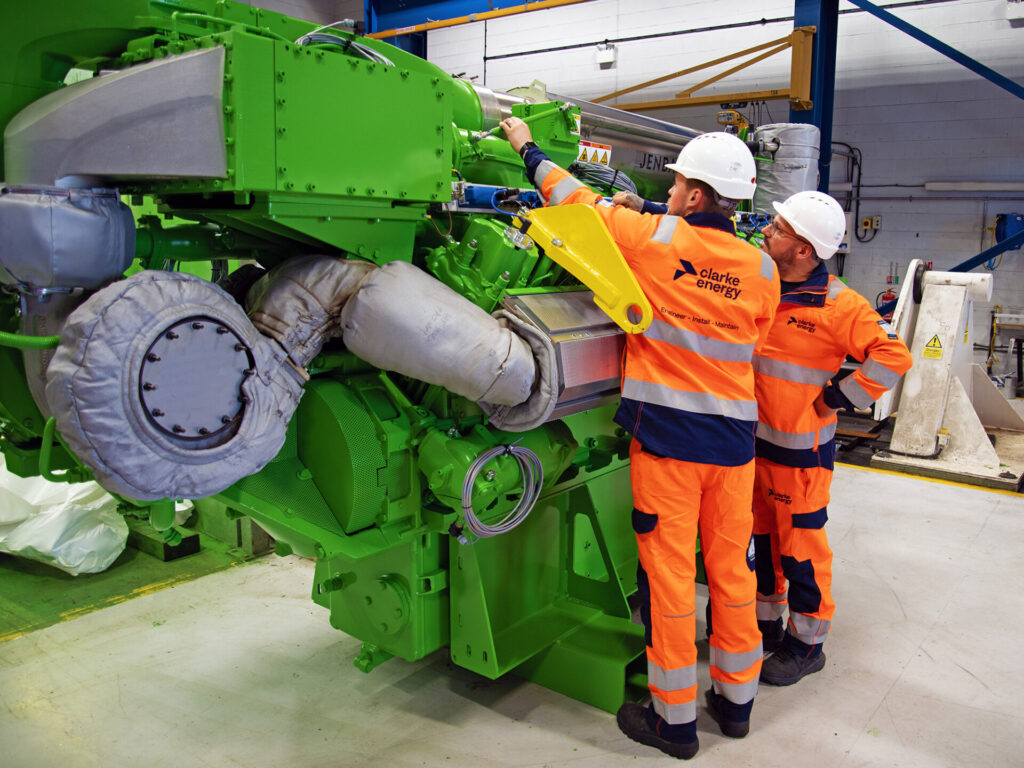
Clarke Energy is one of them. Between ECI's investment and the sale to Kohler's Power group, turnover grew by 50%, driven by expansion into multiple new geographies. Faye Maughan, Investment Director at ECI, and Lewis Bantin, Partner in ECI's Commercial team and part of the Clarke investment, set out the four drivers that can make international growth an attractive route to growth for maintenance services businesses.
1. Recurring service revenues make expansion practical
International growth becomes materially easier when future revenues are predictable. Installation work is often lower margin, cyclical and hard to forecast. The real value in a maintenance services business sits in the ongoing relationship with the customer.
Every new facility Clarke delivered secured the rights to future parts and maintenance. That gave the business exceptional visibility over demand and a highly recurring revenue stream.
"The magic here was the in-perpetuity parts and maintenance revenue stream," Lewis recalls. "We knew exactly when engines would require servicing and what parts would be needed."
That predictability funded expansion. It let management invest in new territories, recruit engineering talent and pursue acquisitions without depending on winning the next large project.
2. The expertise travels, even if the people don't
Many businesses struggle abroad because local markets demand different products. Technical services businesses are often the exception. The more specialised the equipment or end service, the more consistent the engineering challenge across geographies.
Clarke supported hospitals in the UK, fertiliser plants in India, mining operations in Australia and industrial sites across Africa and Asia. Very different customers, very similar underlying engineering. Local engineers were recruited and trained in each market, but core design standards and operational disciplines were shared globally.
"If you looked at a plant in India, a plant in the UK or a plant in Australia, they would have looked broadly similar," Lewis explains.
That consistency also mattered to Clarke's OEM partner, GE. A broader footprint meant GE could rely on a single delivery standard for its Jenbacher engines across markets, which reinforced the commercial relationship as Clarke scaled.
3. Local trust still has to be earned
Portable expertise does not mean international growth can be run from head office. Clarke's success depended on investing in local capability: recruiting, training and retaining engineers in each country so the business could respond quickly and build relationships on the ground.
The drivers of demand varied by market. Coal mine methane capture in Australia. Anaerobic digestion in the UK. Security of electricity supply in India. What stayed constant was Clarke's reputation for delivering specialist engineering work to a high standard. Customers want local responsiveness and confidence that standards hold steady wherever the business operates. Both matter equally.
4. Growth rarely follows a single route
International expansion rarely follows one path. Some markets are best entered organically, by recruiting local teams and building from scratch. Others are entered faster through acquisition.
The deciding factor is usually the maturity of the local ecosystem. Where established competitors and a strong talent pool exist, acquisition can give immediate access to engineers, customer relationships and operational know-how. Clarke's entry into the US worked this way, acquiring a local partner and using that platform to accelerate growth. In less developed markets, organic build made more sense.
This dual approach, matched to the market rather than forced by ideology, drove the 50% turnover growth that took Clarke to its sale to Kohler.
Insights
22/09/2026
Lewis Bantin,
Faye Maughan
Read Time: Min
Why maintenance services businesses travel well: the Clarke Energy case study
Following a strong year for the ECI team, we have been shortlisted for three awards at the GP Bullhound Allstars Awards 2026.
We are delighted to be nominated for Growth and Buyout Fund of the Year, alongside two individual nominations for Investor of the Year.
Daniel Bailey, has been nominated in recognition of his work in delivering the exit of Peoplesafe for a 2.7x return, and helping steer CSL into ECI's first continuation vehicle, which delivered a 3.5x return.
Rory Nath has been nominated for leading our first European platform deal, with our investment in Paragin Group, the Dutch HQ’d market leader in mission-critical assessment software
Investor Allstars, now in its 24th year, celebrates the founders, investors and companies driving innovation and growth across Europe's technology ecosystem. Often called the Oscars of the tech world, it brings the community together to recognise the people and firms behind the year's standout performances.
The last 12 months have been a busy and rewarding period for ECI, continuing our focus on backing high-growth, resilient businesses and supporting our portfolio companies to achieve their growth ambitions. To see the team recognised at a fund level, and to have two of our investors shortlisted individually, reflects both the calibre of the management teams we back and the hard work that goes on behind every deal.
Congratulations to Daniel and Rory, and to all the investors and entrepreneurs shortlisted this year.
See the full shortlist here.
News
18/09/2026
Read Time: 1 Min
ECI shortlisted for 3 awards at Allstars 2026

Avantia, the digital home insurance platform, has added Accredited Insurance (UK) Limited as a new co-insurer, marking a significant milestone in its continued growth and commercial evolution.
The move follows the news in October 2025 that AXA UK renewed its underwriting agreement with Avantia in a new multi-year deal, extending a partnership that first began in 2012. Under the new co-insurance agreement, AXA retains an 80% share, while Accredited, a private equity-owned, A-rated insurer known for its agility and strong capitalisation, joins the panel on a five-year agreement underwriting the remaining 20%. Together, the two providers create a dual-insurer model that strengthens Avantia's financial resilience and broadens its insurer base.
The addition of Accredited reflects a proactive, strategic decision to diversify Avantia's capacity structure. Accredited was chosen not only for its A-rated financial credentials, but for its strong cultural alignment with Homeprotect, sharing Avantia's commercial DNA, pace and growth ambitions as the business looks to its next phase of development.
The shift to a dual-insurer model is also expected to deliver tangible benefits for customers, with greater commercial flexibility in the capacity structure enabling Homeprotect to pass on more competitive pricing to policyholders.
The news comes against a backdrop of strong commercial performance for Avantia. At the heart of this is the business's proprietary dynamic non-standard risk pricing model, which allows it to accurately assess and price complex, non-standard risks, providing access to fair and competitive cover for customers who may struggle to find it elsewhere.
Mark Eastham, CEO at Avantia Group, says, “The addition of Accredited marks an exciting new chapter. This is a new partnership built on strong cultural alignment and shared ambitions, and I believe that matters enormously when it comes to delivering for our customers over the long term. Our new partnership model puts us in the strongest position to be even more competitive to customers in the non-standard home insurance market and to achieve our growth ambitions of scaling our business to one million customers. We're looking forward to what we can build together."
George Moss, Managing Partner at ECI, says: "This is an important milestone for Avantia. A dual-insurer structure with two strong partners gives the business greater flexibility and a fantastic foundation for further growth. It is a sign of the platform that Mark Eastham and the team have built that capacity providers of this calibre are opting to be partners. There is fantastic momentum at Avantia, and this is just another important step as they continue to scale. Congratulations to the whole team”
News
09/09/2026
Read Time: Min
Avantia welcomes Accredited as new co-insurer alongside AXA

ECI are delighted to announce our investment in Shaw Gibbs, a top 35 practice which supports private individuals, entrepreneurial businesses, public sector/non-profit organisations and international groups with tailored accounting, tax and advisory services.
Founded on a commitment to building strong, long-term client relationships, Shaw Gibbs has established itself as one of the UK's leading accountancy, tax and business advisory firms servicing c.25,000 clients. Combining local service, deep technical expertise and innovative solutions, the business helps clients navigate increasingly complex financial and regulatory environments through a comprehensive suite of advisory, accounting, tax and audit services.
Since Apiary’s investment in 2022, the business has completed fourteen acquisitions, expanding its reach across the UK and Ireland. Recent additions including Alliotts, Martin and Company, and Crowleys DFK in Ireland, strengthened the group's regional footprint to support clients through local relationships backed by national scale.
Shaw Gibbs’ focus on its employee value proposition has supported its growth, creating an entrepreneurial and collaborative culture, strong training and development programmes, and long-term progression pathways. This has helped support leading employee retention rates and longevity of customer relationships.
Shaw Gibbs selected ECI as its partner for the next phase of growth, recognising ECI's experience supporting relationship-led businesses and its track record in financial services with investments including KB Associates and IGG.
News
09/09/2026
Read Time: Min
Shaw Gibbs partners with ECI to deliver exceptional accounting services across the UK and Ireland

Across five decades of mid-market investing, ECI has reviewed and commissioned commercial due diligence on thousands of transactions, on both sides of the table. Most deals have CDD, whether commissioned by the vendor, the buy side, or both. That means we’ve seen examples of where it genuinely builds not just investor conviction, but also real value for the company, and, sadly, many where it falls flat.
Lewis Bantin, Partner and Head of ECI's Commercial Team, explains how management teams can get more from CDD, across the investment lifecycle.
1. Treat CDD as a strategic lever, not just a validation step
Good CDD should work in two steps. The first and essential part needs to establish foundations – size of market, trends, the full competitive set. The second step should build on this foundational layer – how does it relate to your business plan? Is that plan consistent with customer behaviour, the competitive landscape and your own performance?
Unlike financial DD, this isn’t (just) a rearview mirror exercise. It’s forward looking and open to debate. For that reason, the best CDD prompts discussion and helps set the strategic direction – not just validating trends. ECI’s Commercial Team gets involved in the deal so that the commercial insight developed during due diligence carries straight through into the post-deal strategy work with management. CDD should (in our view!) be genuinely strategic rather than confirmatory; the latter being shelved once the deal completes. The best CDD we have seen opens your eyes to new market opportunities, new lines of business – it's how we understood the scale of opportunity in IoT and led to us backing the founders at Wireless Logic!
2. Choosing the right provider: start early
When selecting a CDD advisor, the most important thing isn’t the name on the door. It’s about the team who will be working with you. They should have spent years immersed in their sector, can talk knowledgeably about stronger and weaker performers as they genuinely know the competitor set, and therefore bring insight and pattern recognition, rather than a template.
Scale matters too, but mainly as it defines cost. There’s a real spread from the global and MBB strategy houses to the boutiques, and in some cases even sole specialists. The right solution is not always the cheapest, but you probably also don’t need a six-figure budget for a customer referencing project. Lean on your network here. Your corporate financier and/or investor will have worked on comparable projects and should be able to direct you to the relevant specialists and right size the pitch. The important thing is timing – you don’t want to be meeting providers as you go. Getting to know the right people in your sector well before a process starts means you’re choosing based on fit and insight, not availability.
3. Build the data foundations for CDD
One of the delays that often happens during the CDD process is unstructured or missing data, with providers spending their time knitting together various sources and making assumptions, rather than being able to present a coherent picture at the start. Pipeline and conversion data is often an important part of this. Without a quarterly view of how the pipeline is moving, it’s genuinely difficult to predict what the next six to twelve months will look like. Churn is the other areas we tend to see businesses underinvest in data quality. Many companies capture a high level 30,000 ft reason as to why a customer left, often because a drop-down box gets completed by an account manager who understandably wants to move onto the next deal. Things you can set up early, such as recording and transcribing exit conversations, and asking directly whether it was budget, competition, product etc, gives you a better pattern to work with from the start. The same applies to customer referencing more broadly: it's most useful when it's a routine habit rather than something commissioned for the first time in the run-up to a sale. Research shows that management-curated references are unsurprisingly 30-40% more positive than independently sourced customers, so few investors will rely on it wholly. With that in mind, it’s better to have the time to understand and remedy any likely outputs from customer referencing, rather than trying to curate the answer.
4. Be honest about the plan, and don’t overplay your hand
Management teams, and sometimes their investors, unsurprisingly take the view that a more ambitious plan can support a stronger valuation. But massaged figures or overselling as established strategy something that is no more than a twinkle in the eye, often end up with teams discussing why something isn’t right, rather than why it is – and that can actively hinder conviction. Even if overplaying your hand on AI capability or sales traction gets you through a hot process, it tends to catch up post-deal, ending up with a difficult first year and often a disappointed investor.
The best CDD providers will put you on the right side of the ambition line. Because they aren’t paid on completion, they’re often the most objective read a management team will get on how bullish their own plan really is. That’s why it’s best to treat time with them as a genuine conversation rather than a test to pass.
5. New frontier: AI and defensibility
If you think about the classic Michael Porter Five Forces framework, that has shaped most of CDD thinking, barriers to disruption and substitution used to sit low on the list of diligence priorities. Technological change and AI now mean that it’s central. Management teams should expect to answer the defensibility question re AI-native entrants and should have a considered view. We cover this in more depth in: How are investors thinking about AI defensibility and opportunity.
Insights
03/09/2026
Lewis Bantin
Read Time: Min
How to prepare effective Commercial DD

TOPICS:
Lewis Bantin
Load More